

Rockstar Games Names in Epstein Files 2026: Court Documents, Not Accusations
The phrase Rockstar Games names in Epstein files 2026 has recently sparked confusion, speculation, and viral misinformation across social media platforms. Many readers are seeing headlines without context, leading to assumptions that are not supported by the actual court records. This article aims to clearly explain what the documents contain, why these names appear, and what the information does not mean.
In an era where document dumps are often misread as verdicts, it is essential to separate verified facts from exaggerated narratives. The unsealed files connected to the Jeffrey Epstein and Ghislaine Maxwell cases are extensive, complex, and largely historical. Understanding them requires patience, legal awareness, and responsible interpretation.
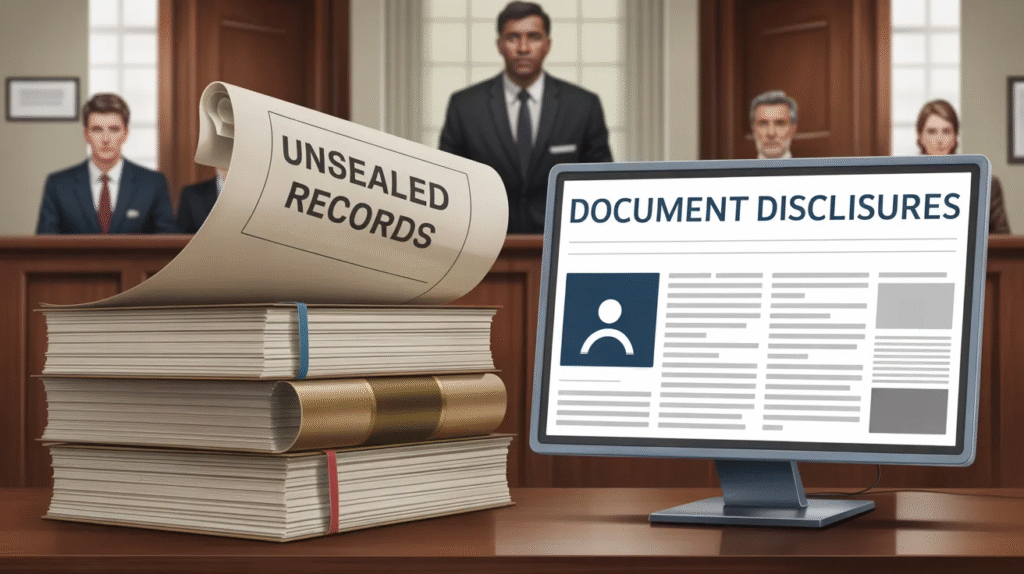
Table of Contents
Separating Courtroom Mentions, Allegations, and Facts From Online Misinformation
Understanding the Epstein Files: Why Documents Were Unsealed
The Epstein files are part of long-running civil court cases connected to Jeffrey Epstein and his associate Ghislaine Maxwell. For many years, these documents remained sealed to protect victims, witnesses, and sensitive legal details. Courts often seal such records to prevent harassment, misinterpretation, or interference with ongoing proceedings.
In later stages of the litigation, judges ordered portions of these files to be unsealed to promote transparency and public accountability. Unsealing does not mean the court is confirming the truth of every statement inside. It simply allows journalists and the public to review depositions, emails, and third-party references that were previously confidential.
This point is essential when discussing Rockstar Games names in Epstein files 2026. Court documents can include names mentioned by witnesses for background or context, even if those individuals are not accused of crimes. Legally, a name appearing in an unsealed document does not equal guilt, suspicion, or investigation. It only reflects that the name appeared somewhere in testimony or correspondence.
Why Rockstar Games Executives Appear in the Documents
Rockstar Games executives appear in the files because of testimony provided by Sarah Ransome, a survivor who gave detailed statements during civil proceedings. In her deposition, Ransome described different phases of her life, including personal relationships that occurred before and after her involvement with Epstein.
During this testimony, she mentioned Leslie Benzies and Sam Houser in connection with her experiences in the early-to-mid 2000s. These references were made as part of her personal narrative, not as part of an investigation into Epstein’s trafficking operation.
Importantly, the documents do not allege that these individuals participated in Epstein’s crimes, recruitment, or abuse network. Their names appear because Ransome described people she knew during that period of her life. This distinction matters greatly when evaluating Rockstar Games names in Epstein files 2026, as many viral posts fail to explain why names appear or how testimony works in civil cases.
Who Is Sarah Ransome?
Sarah Ransome is a publicly known survivor who testified in civil cases related to Jeffrey Epstein and Ghislaine Maxwell. She has spoken openly about her experiences and submitted written statements and depositions as part of the legal process.
Her testimony includes direct experiences, emotional reflections, and broader commentary on relationships, power imbalances, and trauma. Legal experts explain that survivor testimony often blends factual events with personal interpretation, which is natural in cases involving long-term abuse.
Courts and journalists typically separate testimony into three categories: verifiable facts, personal allegations, and symbolic or interpretive statements. This approach allows survivor voices to be heard while still maintaining legal accuracy.
Understanding this structure is important when reading documents connected to Rockstar Games names in Epstein files 2026. The presence of a name reflects what the witness stated, not a legal conclusion or judgment by the court.
Leslie Benzies Allegations Explained
In her deposition, Ransome states that she was romantically involved with Leslie Benzies during the early-to-mid 2000s. She alleges that the relationship involved emotional and physical abuse. These statements are presented as personal allegations within a civil legal filing.
Several important clarifications must be made. These allegations are not criminal charges, and they are not linked to Epstein’s trafficking activities. No court has ruled on these claims, and they have not been tested in a criminal trial.
Civil depositions allow individuals to share their experiences under oath, but they do not determine guilt or innocence. This means the allegations remain unproven from a legal standpoint.
When discussing Rockstar Games names in Epstein files 2026, it is essential to recognize that Benzies’ mention relates to a personal relationship allegation, not to Epstein’s criminal network or the broader trafficking investigation.
Sam Houser’s Mention: What Is Actually Claimed?
Sam Houser’s name appears in the same testimony through an awareness-based claim. Ransome alleges that Houser knew about the alleged toxic environment surrounding her relationship with Leslie Benzies and did not intervene.
From a legal perspective, this is not an accusation of abuse or criminal behavior. It is an allegation of awareness rather than participation. The documents do not claim that Houser engaged in violence, facilitated harm, or supported Epstein’s activities in any way.
As of 2026, there are no known criminal investigations, civil lawsuits, or legal actions connected to this claim. No court findings exist that establish responsibility or wrongdoing.
This distinction is critical for accurate reporting. In the context of Rockstar Games names in Epstein files 2026, Houser’s mention reflects what a witness claimed, not a legal determination.

No Evidence of Epstein Involvement
One of the clearest points in the documents is what they do not show. There is no evidence linking Rockstar executives to Jeffrey Epstein’s trafficking operation.
The files contain no flight log entries, no island visit records, no emails with Epstein or Maxwell, and no allegations of sexual crimes or trafficking involvement. This directly contradicts many online claims that attempt to imply a deeper connection.
Names appearing in court documents without supporting evidence of wrongdoing should not be treated as proof. Legal experts stress that third-party mentions are common in depositions, especially when witnesses describe long personal histories.
For readers evaluating Rockstar Games names in Epstein files 2026, this absence of evidence is one of the most important facts to understand.
The “GTA Themes” Interpretation: Symbolic, Not Legal
Ransome also made symbolic statements suggesting that certain themes in the Grand Theft Auto series reflected attitudes she associated with her personal experiences. These comments focus on power, violence, and depictions of sex work.
However, these statements are clearly interpretive rather than factual. Courts do not treat artistic analysis as evidence, and there is no production documentation linking game themes to personal behavior.
Video games are developed by large teams, shaped by market trends, satire, and cultural commentary. Legal professionals generally classify such claims as opinion, not proof.
In discussions around Rockstar Games names in Epstein files 2026, it is important to separate symbolic commentary from legally relevant information.
How Misinformation Spreads Around Court Documents
Large document releases often lead to confusion. Screenshots, partial quotes, and sensational headlines remove critical context, causing readers to assume guilt where none has been established.
Social media algorithms reward engagement, not accuracy. As a result, names pulled from complex legal records are often presented without explanation of why they appear or what the law actually says.
This is exactly how confusion around Rockstar Games names in Epstein files 2026 spread so quickly. Responsible reporting focuses on timelines, legal meaning, and verified facts.
Unsealed documents increase transparency, but they do not assign blame.
Legal Status in 2026: What We Know for Certain
As of 2026, there are no known criminal investigations involving Rockstar leadership related to Epstein. There are no civil judgments, no confirmed lawsuits, and no official findings of wrongdoing connected to these mentions.
The information remains historical, contextual, and unproven. Courts have not ruled on the personal allegations described in the testimony.
This legal reality is often overlooked in online discussions, but it remains the most reliable reference point for readers seeking accurate information.
Why Context Matters More Than Virality
Context protects both survivors and the public. Survivor testimony deserves to be heard respectfully, while public figures deserve not to be falsely linked to crimes without evidence.
Combining unrelated narratives under sensational headlines creates misunderstanding and damages credibility. The discussion surrounding Rockstar Games names in Epstein files 2026 shows why careful reading and responsible reporting matter more than viral reach.

Meta Description
Rockstar Games names in Epstein files 2026 explained with facts, legal context, and clear distinctions. No rumors, only verified information.
Conclusion
The presence of Rockstar executives’ names in unsealed Epstein-related documents has been widely misunderstood. While the documents are real, their interpretation requires care, legal awareness, and restraint. The connection exists through a survivor’s personal testimony, not through Epstein’s criminal enterprise.
Understanding stories like Rockstar Games names in Epstein files 2026 means resisting sensationalism and focusing on verified facts. In a digital environment driven by speed, context remains the most valuable tool readers have. Read More: GTA 6 Confirmed Leaks 2026: What Rockstar Has Officially Acknowledged
FAQs
Q: Why are Rockstar Games executives mentioned in the Epstein-related documents?
A: The names appear due to testimony given by an Epstein survivor in a civil deposition. The mention is contextual and related to personal history, not criminal investigations or Epstein’s trafficking activities.
Q: Are Sam Houser or Leslie Benzies accused of crimes linked to Jeffrey Epstein?
A: No. The documents do not accuse Sam Houser or Leslie Benzies of participating in Epstein’s crimes, trafficking, or abuse network. There are no such allegations in the court records.
Q: Did any Rockstar Games executive visit Epstein’s island or appear on flight logs?
A: No. There is no evidence showing that any Rockstar Games executive visited Little St. James island or appeared on Epstein’s flight logs.
Q: What kind of allegations are mentioned against Leslie Benzies?
A: The allegations relate to a past personal relationship, where abuse is claimed by the individual giving testimony. These are civil allegations, not criminal charges, and have not been proven in court.
Q: Is Rockstar Games legally involved in the Epstein or Maxwell cases?
A: No. Rockstar Games as a company is not involved in the Epstein or Maxwell cases, and no legal action has been taken against the company in this matter.
Q: Why is there so much misinformation around these documents?
A: Large document releases often lead to confusion because names are shared without context. Social media posts and headlines sometimes remove legal nuance, causing readers to assume guilt where none has been established.