Rockstar Games GTA 6 Legal Battle: UK Tribunal Ruling Explained
The Rockstar Games GTA 6 legal battle has taken a major turn after a UK employment tribunal rejected interim relief requested by a group of former Grand Theft Auto VI developers. Delivered in January 2026, the ruling does not end the case, but it has already reshaped how both Rockstar Games and the developers’ union are framing their arguments.
This dispute goes far beyond a typical workplace disagreement. It touches on union rights, confidentiality in game development, and the intense secrecy surrounding one of the most anticipated video games of all time. With GTA 6 currently scheduled for release on November 19, 2026, the timing of this legal drama could not be more sensitive.
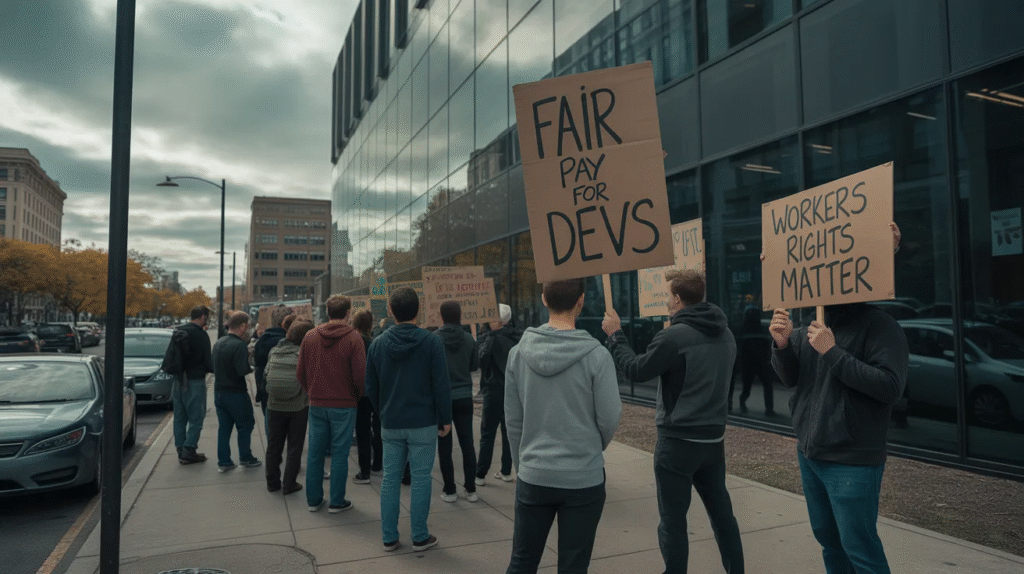
GTA 6 Legal Battle: Rockstar vs Fired Developers
What Is the Rockstar Games GTA 6 Legal Battle About?
At the center of this case are several developers who worked on Grand Theft Auto VI at Rockstar North in the UK. These employees were dismissed in late 2025 after Rockstar accused them of gross misconduct, claiming they shared sensitive internal development information in a private Discord server.
The fired developers are supported by the Independent Workers’ Union of Great Britain (IWGB). According to the union, the dismissals were not about leaks at all. Instead, they argue Rockstar was engaging in union-busting, targeting workers who were organizing for better conditions and collective representation.
Rockstar strongly denies this. The company maintains that confidentiality is essential to its business and that any sharing of internal information outside approved channels is a serious breach of trust.
This clash between corporate secrecy and labor rights is what pushed the case into the UK employment tribunal system.
What Is Interim Relief and Why Did It Matter?
Interim relief is one of the most exceptional remedies available under UK employment law. It is designed to protect employees only in very limited circumstances where a tribunal believes their claim is overwhelmingly strong. If granted, interim relief can require an employer to temporarily reinstate a dismissed worker, continue paying their salary, and preserve their employment status while the main legal case is still ongoing.
In the Rockstar Games GTA 6 legal battle, interim relief would have allowed the fired developers to remain on Rockstar’s payroll and retain their work visas until a final decision was reached. For the developers, this protection was critical, as dismissal not only affected their income but also created immigration and career risks. Interim relief would have stabilized their situation and strengthened their legal position.
For Rockstar Games, however, granting interim relief would have been a significant blow. It would have forced the company to continue employing individuals it claims breached confidentiality, while also signaling to the public that the tribunal viewed the developers’ claims as highly likely to succeed. This is precisely why UK law sets such a high bar for granting interim relief.
Why the UK Tribunal Rejected Interim Relief
In the Rockstar Games GTA 6 legal battle, the Glasgow Employment Tribunal made it clear that rejecting interim relief was a procedural decision rather than a ruling on the substance of the claims. Presided over by Judge Frances Eccles, the tribunal emphasized that this stage was not meant to determine whether the developers were unfairly dismissed. Instead, the decision focused solely on whether the exceptionally high legal threshold for interim relief had been met.
The tribunal acknowledged that the dispute raises complex legal and factual issues that cannot be resolved without a full hearing. Given the limited evidence available at this early stage of the Rockstar Games GTA 6 legal battle, the judge concluded that granting an extraordinary remedy such as interim relief would be inappropriate. As a result, the case will now proceed through the standard tribunal process, where evidence can be examined in greater depth and witnesses can be questioned.
The “Likely to Win” Legal Threshold
A central reason interim relief was denied in the Rockstar Games GTA 6 legal battle is the strict “likely to win” legal standard. Unlike ordinary employment claims, interim relief requires claimants to show a very high probability of success at the final hearing, not just a reasonable or arguable case.
The tribunal found that the developers and their union did not meet this demanding requirement. Several critical issues remain disputed, including the motivation behind the dismissals and the nature of the information allegedly shared. Without resolving these disputes through a full hearing, the tribunal could not confidently conclude that the developers would succeed. The judge also clarified that failing to meet this threshold does not mean the claims lack merit; it simply reflects the heavy burden imposed at the interim stage of the Rockstar Games GTA 6 legal battle.
Canadian Developers Were Also Fired
Another factor that weakened the interim relief application was evidence that Rockstar Games dismissed three developers in Canada who were not part of the UK-based union. Rockstar relied on this point to argue that the dismissals were not limited to union organizers, but instead formed part of a broader response to alleged misconduct.
This evidence complicated the union’s argument that the firings were driven primarily by anti-union motives. If non-union employees in another country were dismissed under similar circumstances, it becomes harder to prove retaliation as the dominant reason. The tribunal viewed this as a significant issue because motive lies at the heart of the Rockstar Games GTA 6 legal battle, particularly when claims of unfair dismissal and retaliation are involved.
Discord Server Security Concerns
As part of the Rockstar Games GTA 6 legal battle, the company raised serious concerns about security risks linked to a Discord server used by the developers. Evidence presented to the tribunal indicated that the server was not restricted solely to current employees. It reportedly included former staff members, non-employees, and even a journalist, which undermined the argument that all discussions were strictly internal.
Rockstar argued that sharing sensitive development information in such an environment breached its confidentiality policies, regardless of whether the material was ultimately leaked to the public. While the tribunal did not rule on whether misconduct had definitively occurred, it accepted that Rockstar’s security concerns were credible. This uncertainty played a role in weakening the interim relief application and supported the tribunal’s decision to allow the case to proceed to a full hearing.
Rockstar Games’ Position
In the Rockstar Games GTA 6 legal battle, Rockstar Games has framed the tribunal’s decision as confirmation that its actions were justified under existing company policy. The studio maintains that strict confidentiality standards are essential to protecting its employees, intellectual property, and high-profile projects such as Grand Theft Auto VI. From Rockstar’s perspective, enforcing these rules is a fundamental part of operating a large, security-conscious development environment.
Rockstar has repeatedly stated that the dismissals resulted from a clear breach of trust rather than retaliation against union activity. The company emphasizes that it followed established internal disciplinary procedures and applied them consistently across different regions. According to Rockstar, the tribunal’s refusal to grant interim relief supports its argument that the situation is complex and not as straightforward as critics have suggested.
The Union’s Response
The Independent Workers’ Union of Great Britain has strongly rejected the notion that the ruling represents a substantive victory for Rockstar Games. In the context of the Rockstar Games GTA 6 legal battle, the union describes the decision as a procedural setback that does not reflect the strength of the underlying unfair dismissal claims or the evidence it intends to present at a full hearing.
Union representatives argue that interim relief applications are notoriously difficult to win due to the exceptionally high legal threshold involved. They believe the real test will come during the substantive tribunal, where internal communications, management decisions, and timelines can be examined in detail. For the union, the focus now shifts to building a comprehensive evidentiary record capable of withstanding scrutiny at trial.
What This Means for GTA 6 Development
Although the tribunal ruling does not directly affect GTA 6’s production schedule, it adds pressure to an already high-stakes development cycle. Rockstar Games is working under intense public scrutiny, and legal disputes of this nature can influence workplace morale and external perception.
The case has also drawn rare attention to labor practices within major game studios, an area that is often shielded from public view. Even if development continues smoothly, the legal battle has changed the narrative surrounding GTA 6’s production environment.
Release Date Pressure
Grand Theft Auto VI is currently scheduled for release on November 19, 2026. Rockstar has not indicated that the legal dispute will cause additional delays, but prolonged litigation can create indirect challenges, particularly if key personnel are involved or internal processes are disrupted.
With fan expectations at historic levels, any factor that could affect development timelines is being closely monitored by both the industry and the public.
Workplace Protests and Political Attention
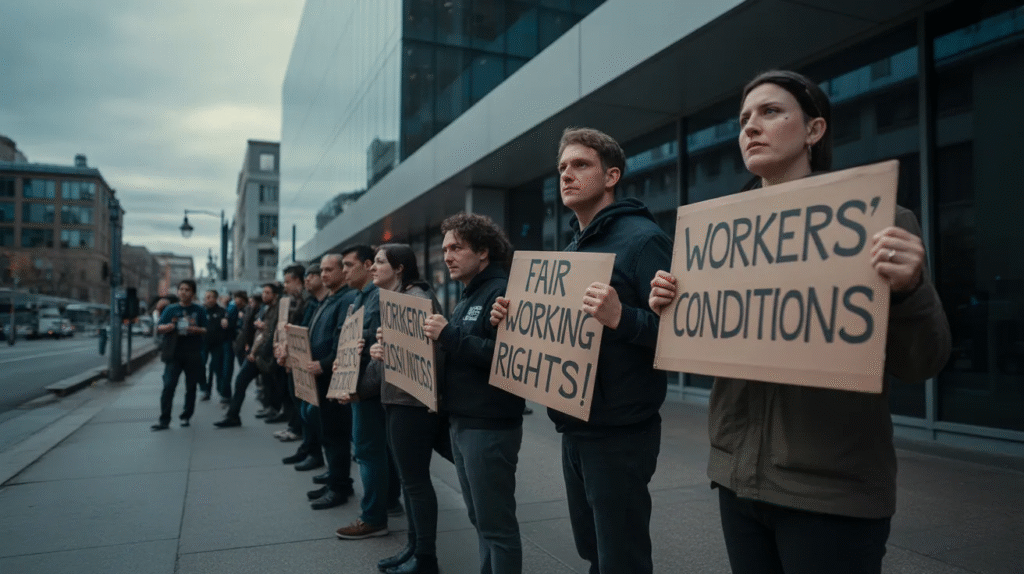
The dismissals triggered protests outside Rockstar North’s Edinburgh office, an unusual occurrence for a major game studio. These demonstrations highlighted broader concerns about worker rights in the gaming industry.
The controversy also attracted political attention, with UK Prime Minister Keir Starmer publicly describing the situation as “deeply concerning.” Such high-level commentary has further elevated the case’s profile and increased pressure on Rockstar to manage the situation carefully.
The Irony: A Legal Case That Caused New GTA 6 Leaks
Ironically, the legal proceedings themselves have led to the disclosure of information Rockstar was trying to protect. Tribunal documents revealed that a 32-player online multiplayer mode for GTA 6 was being tested internally.
While details remain limited, this revelation excited fans and demonstrated how legal discovery can force transparency, even in highly secretive development environments.
What Happens Next in the Rockstar Games Tribunal Case?
The next stage is a full substantive employment tribunal hearing. During this phase, evidence will be examined in depth, witnesses may testify, and the tribunal will assess whether the developers were unfairly dismissed.
This final ruling will determine whether Rockstar Games violated employment law or acted within its rights to enforce confidentiality standards. Either outcome could have lasting implications for labor relations in the global games industry.
Why Gamers Should Care About This Legal Battle
For many players, legal disputes between developers and publishers may seem distant from the games they enjoy. However, the Rockstar Games GTA 6 legal battle directly touches on issues that shape the quality, creativity, and sustainability of modern game development. This is not simply a story about contracts and tribunals it is about how the world’s biggest games are actually made.
First, the case shines a light on how modern AAA games are developed behind closed doors. Games like GTA 6 are created by hundreds, sometimes thousands, of developers working under intense pressure, strict confidentiality rules, and long development cycles. Legal cases like this expose the realities of those environments, including how studios manage internal communication, security, and employee conduct. For gamers who care about transparency in the industry, this level of insight is rare and significant.
Second, the dispute highlights the human cost behind blockbuster titles. While players see polished trailers and massive open worlds, developers often face job insecurity, long hours, and high expectations. The sudden dismissal of experienced developers especially when visas and livelihoods are involved reminds players that real people stand behind the games they love. Understanding these human stakes can change how fans view delays, design decisions, and even studio reputations.
Final Thoughts
The UK tribunal’s decision to deny interim relief marks an important procedural moment in the Rockstar Games GTA 6 legal battle, but it is not a final judgment on the case itself. Rockstar has avoided an immediate and disruptive outcome, while the dismissed developers and their union still have the opportunity to present full evidence at a substantive hearing. In legal terms, the dispute remains very much active, with key questions around motive, confidentiality, and fairness yet to be conclusively resolved.
What makes this case especially significant is its timing, as Grand Theft Auto VI approaches its planned release amid unprecedented scrutiny. Regardless of the final ruling, the case has already exposed internal development practices, intensified debate around labor rights in the gaming industry, and challenged long-held assumptions about accountability at major studios. The eventual verdict is likely to resonate far beyond Rockstar Games, potentially shaping how AAA developers balance secrecy, workplace rights, and creative freedom in the future.
Meta Description
UK tribunal rejects interim relief for fired GTA 6 developers. Learn what this means for Rockstar Games, GTA 6 development, and the ongoing legal battle.
Conclusion
The rejection of interim relief in the Rockstar Games GTA 6 legal battle represents a significant procedural step, but it does not resolve the core dispute. While Rockstar has avoided an immediate setback, the developers and their union still have the opportunity to challenge the dismissals in a full tribunal hearing, where the real legal test will take place.
As Grand Theft Auto VI moves closer to release, this case has already left a lasting impact by exposing internal development practices and reigniting debate around labor rights in the gaming industry. The final verdict will not only affect Rockstar Games and the dismissed developers, but may also influence how major studios worldwide balance secrecy, employee rights, and accountability in the future.